


SpaceX revealed plans to add 15,000 more Starlink satellites aiming to transform its network into a cellular backbone and hinting at future partnerships with mobile carriers.
Starlink Expands Beyond Internet to Cellular Future
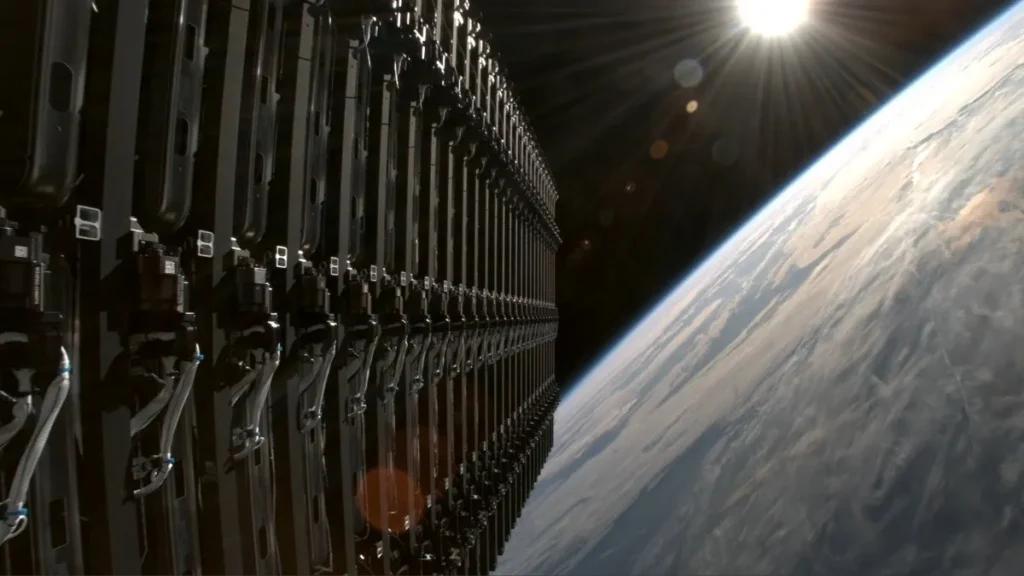
The idea of Starlink began with satellites bringing internet to remote corners of Earth but now SpaceX is looking far bigger adding 15000 more satellites to the skies the constellation could move from just WiFi style service to becoming a backbone for mobile networks
this means your phone might connect directly to Starlink satellites instead of towers in the future it is a vision where no valley desert or island remains out of coverage the night sky
may soon look like a moving net of signals carrying not only data but also voices calls and messages from one end of Earth to another the plan shows how
ambitious the company is turning a simple internet service into a cellular giant
Carrier Partnerships on the Horizon

Hints dropped by the company suggest that mobile carriers may soon join hands with Starlink instead of competing imagine a world where your existing SIM card stays the same but when you leave a city or lose tower signals the Starlink constellation quietly takes over the call
continues the message goes through and the video streams without pause this is not just a dream anymore it is the path being built step by step if 15000 more satellites rise into orbit the network could rival traditional telecom and make roaming charges disappear forever the future of connectivity may
be written not in ground cables or towers but in glowing satellites that never sleep circling Earth every ninety minutes carrying the world’s conversations
How Cellular Starlink Could Change Global Mobile Networks
Cellular Starlink has the potential to redefine how people connect worldwide. Instead of relying only on traditional cell towers, this system could beam signals directly from orbit to smartphones. Imagine being able to make a call or use the internet from the top of a mountain, deep inside forests, or while sailing across the ocean — all without losing network coverage.
For mobile carriers, this could be a huge shift. Instead of investing billions into building towers in remote areas, they could partner with Starlink to extend their coverage instantly. Emergency services could also benefit, as natural disasters often knock out ground-based infrastructure, but satellites remain unaffected.
If successful, this technology might bring the world one step closer to true global connectivity — a future where your mobile signal follows you everywhere, from cities to the most isolated corners of Earth.